
Emergency Chimney Sweep Near Me: What Herriman Homeowners Should Do First
If smoke is backing into your living room right now, calling a chimney sweep is actually step three, not step one. The order matters: put the fire out safely, confirm nothing is burning where it shouldn’t be, then get a professional on the line. Most of what Herriman homeowners search for late at night is urgent but not immediately life-threatening, and knowing which situation you’re in changes what your first move should be. If you’d rather skip the triage and talk it through with someone, call (866) 972-2258.
We’ve walked into a lot of chimneys in this valley, and the pattern holds: the callers who knew the difference between “call 911” and “call tomorrow morning” got the right outcome faster. Here’s the sequence we’d want our own neighbors to follow.
Your Three-Step Triage: Chimney Fire, Backdraft, or Odor?
The fastest way to sort an emergency from an inconvenience is to answer one question: is there fire where fire doesn’t belong? That single check separates the three situations homeowners confuse most. Run through it in order.
- Active chimney fire. Call 911 first. Get everyone out of the house. Then call a sweep once the fire department has cleared the scene.
- Smoke backdraft. No flames, no roaring, but smoke rolling into the room. Check the damper position and the draft before dialing anyone.
- Odor with no smoke. A sharp, smoky, or creosote smell that lingers when the fireplace is cold. This is schedule-urgent, not an emergency.
In our experience, the third category generates the most 10 p.m. searches, and it’s almost always the least dangerous. A cold fireplace that smells like last winter’s fires is telling you the flue has buildup that needs sweeping, not that your house is on fire. A chimney inspection in Herriman sorts that out quickly and gives you a real answer instead of a guess.
Here’s where people get into trouble: they assume any smoke means a chimney fire, panic, and skip the damper check. Or the reverse. They smell creosote, shrug it off for another season, and let a real draft problem sit. Getting the category right is most of the battle.
How Do You Know If It’s an Active Chimney Fire?
An active chimney fire doesn’t always look like the movies. Many burn quietly inside the flue and never show visible flame from the firebox. The signs Herriman homeowners miss most often are the ones they don’t recognize as chimney symptoms at all.
- Popping or crackling sounds coming from the chimney itself, not the firebox. That’s a common signature of creosote igniting.
- A dense, hot smoke smell that’s sharper than your normal wood smoke, sometimes with a burning tar undertone.
- Sparks or flames visible from the crown or at the top of the chimney outside, which is the clearest sign of all.
- Puffy, dark smoke rolling from the chimney top instead of the thin wisp you usually see.
- A low roar that sounds like a distant freight train inside the flue.
If you notice more than one of these, treat it as active and call 911 before anything else. A chimney fire can spread into the framing of the house without ever breaching the firebox. That’s not a scare line; it’s why we don’t tell anyone to diagnose this one themselves. Get out, call 911, and let the fire department confirm it’s out. Then call a sweep to assess the flue.
What you should not do is pour water down the chimney. Rapid cooling can crack a hot flue tile or masonry liner, and the steam and pressure can push smoke and sparks into the room. Close the glass doors if you have them and get out.
What Should You Do During a Smoke Backdraft?
Smoke rolling into the room with no visible fire means the draft has failed or the damper is closed. The correct first move is to open the damper fully and leave the glass doors closed. You want the smoke finding its way up the flue, not into the room. Adding water or slamming things around can make it worse.
Once the damper is open, watch what happens. If the smoke clears within a few minutes, the draft was just sluggish. If it doesn’t, or if smoke keeps coming, that’s your signal to shut the fireplace down, ventilate the room, and get a professional out for a chimney inspection. A Herriman chimney that won’t draft properly usually has one of a few causes:
- A flue clogged with creosote or a bird nest
- A damper that no longer opens fully or sticks partway
- A chimney cap that’s blocked or damaged
- A flue sized wrong for the fireplace
- A house that’s too tight for the chimney to draw properly, especially with a kitchen or bath fan running
That last one surprises people. Modern homes are built tight, and a bath fan running in the same room can reverse the draft in a cold chimney. If the backdraft only happens on cold mornings or when other fans are on, there’s a good chance you’re seeing a pressure problem, not a chimney full of soot. A chimney sweep can test the draft and tell you which one it is.
Odor Without Smoke: When Is It Actually Urgent?
A cold fireplace that smells like creosote is annoying, but it’s rarely dangerous today. It’s the chimney telling you buildup has reached the point where the flue should be swept before you burn again. Schedule that within the next week or two, not tonight. Plan it before the burning season starts so the schedule isn’t packed when you actually want to light a fire.
Two odor situations do warrant a faster response. A strong gas smell near a gas fireplace or gas insert means stop, ventilate, and call your gas utility or 911. That’s not a chimney issue and it’s not something to sit on. And if the smell is sharp, chemical, or comes with a headache or dizziness while the fireplace is burning, shut it down and ventilate. Carbon monoxide has no smell, but combustion problems can announce themselves through headaches, nausea, or a soot streak you didn’t have before.
For everything else, odor is a schedule question, not a panic question. We tell Herriman homeowners that if a sweep is due within the next season anyway, move it up a few weeks and sleep fine. If the odor only shows up in the shoulder months and disappears when you burn, you’ve got time.
Same-Day Service vs. Emergency: What’s the Real Difference?
“Same-day” means a sweep visits today and addresses the problem with normal scheduling. “Emergency” implies crews dropping everything to respond, which is a different category of call. Here’s how we handle it, and how it actually works in practice.
Same-day fit: backdraft you couldn’t fully solve, a chimney that needs inspection after a small fire, a cap that came loose, or a fireplace you want swept before a cold weekend.
Call 911 instead: active fire in the chimney, visible flames at the crown, smoke filling the house, or anyone feeling dizzy or short of breath inside.
On the phone side, we answer 24/7. A call outside dispatch hours is booked into the next opening, Sunday through Friday, 7am to 7pm. Fast dispatch from 7am to 7pm gets a technician to you when there’s a real reason to be there. Nobody at this company gets sent out at 2 a.m. to a chimney that smells like last year.
That distinction protects you as much as it does us. A late-night visit to a chimney that only needed sweeping isn’t a good use of anyone’s night. And a technician trying to assess structural damage in the dark still can’t see much. Daylight makes for better diagnosis.
What to Have Ready When You Call
A sweep on the phone needs a handful of details to prioritize your call correctly and send the right person. Have these in your head before you dial. It takes 30 seconds and it makes a real difference.
- Fireplace type: masonry with a brick firebox, a prefab metal fireplace, or a gas insert. This tells us what tools and what safety approach to bring.
- Last service date: even a rough guess, like “two years ago” or “we’ve never had it done.” Both are useful. Neither gets you a lecture.
- Fuel burned: seasoned hardwood, unseasoned or “green” wood, artificial logs, or nothing but gas. Unseasoned wood builds creosote faster and changes the assessment.
- Symptoms: what’s actually happening. Smoke in the room, an odd smell, popping sounds, soot on the mantel, or a visible crack.
- Whether the fire is currently out. This one matters most. If it’s not, 911 is the call.
Don’t stress about getting all five perfect. A rough answer on any of them still beats a blank. The one we won’t compromise on is whether the fire is currently burning, because that changes everything about how we respond.
When to Call a Pro (and Why the Sweep Is the Cheap Part)
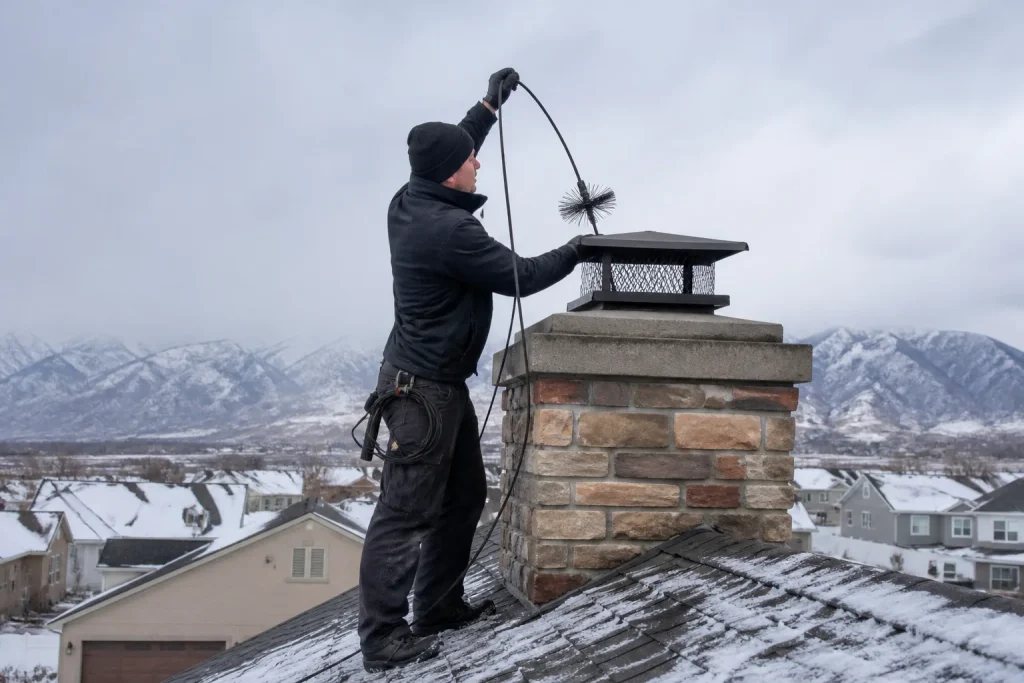
Most chimney problems aren’t apparent from inside the firebox. The dangerous parts of a chimney are the parts you can’t see: the flue liner, the crown, the smoke chamber. That’s why we lead with a chimney inspection. Diagnosis drives the recommendation, not the other way around. We’ll tell you what we found and what it actually means, in language that doesn’t require a trade license to decode.
If the inspection turns up a damaged masonry liner, we can repair it with HeatShield ceramic resurfacing, which restores the liner without tearing out your chimney. If the flue needs relining entirely, we install DuraFlex liner systems, the same flexible liner used across the chimney trade. Caps and crowns come from Gelco and Famco, brands specified for proper fit and longevity. Olympia Chimney components round out the supply line when a job calls for them. None of that is hardware-store substitution, and we don’t pretend otherwise.
What we don’t do is tell everyone they need a full rebuild. Plenty of chimneys in Herriman get swept, inspected, and sent on their way with a clean bill and a next-visit date. Others need a cap or a crown repair. A few need real work. The point of the inspection is to find out which one you’re looking at before anyone picks up a tool.
Our technicians have up to 12 years of experience, and that shows up in the diagnosis. If you want to know what’s actually going on with your chimney, we’ll tell you. If you want a scheduling conversation instead, start with a chimney sweep and we can expand from there.
Related services in Herriman: chimney repair for damage found after a fire or a storm, and fireplace repair when the firebox or damper is the problem rather than the flue. If you’re starting from zero and want to understand our full scope, see Herriman Chimney Sweep.
The Bottom Line
Most late-night chimney searches turn out to be urgent-but-not-emergency, and the fix is the same either way. Get the fire out safely, confirm nothing’s burning where it shouldn’t be, then call. Know the three categories (chimney fire, backdraft, odor), recognize the active-fire signs, and have your fireplace details ready when you dial. That sequence is what separates a calm call from a panicked one.
If you’re in Herriman and need help, Herriman Chimney Sweep offers free estimates. Call (866) 972-2258. We answer 24/7. Fast dispatch from 7am to 7pm, Sunday through Friday. We’ll inspect first, then tell you what we found and what it actually means, without the upsell.
Frequently Asked Questions
Yes. If you see flames at the crown, hear popping or roaring in the flue, or smell dense hot smoke, call 911 first. Get everyone out of the house. Once the fire department clears the scene, call a sweep to assess the flue. A chimney fire can spread into the framing without breaking through the firebox, so this is never a call-it-in-the-morning situation. For an assessment afterward, call (866) 972-2258.
Smoke backdraft means the chimney’s draft has failed or the damper is closed. Open the damper fully, close the glass doors, and watch whether the smoke clears within a few minutes. If it doesn’t, shut the fireplace down, ventilate the room, and schedule a chimney inspection. Common causes are creosote buildup, a stuck damper, a blocked cap, or a pressure problem in a tight house. Call (866) 972-2258 for a same-day inspection when smoke keeps returning.
The general rule is once a year for homes that burn regularly, and more often if you burn unseasoned wood or use the fireplace heavily. Herriman’s dry summers and cold winters push people into a short burning season, which means creosote can build up fast over the winter. A yearly inspection catches buildup and damage early. Schedule the sweep before the burning season starts so you’re not calling during the rush. Call (866) 972-2258 to book an inspection.
Have five things ready: your fireplace type (masonry, prefab, or gas insert), the last time it was serviced, what fuel you burn, what symptom you’re seeing, and whether the fire is currently burning. That last one matters most; if fire is still active, call 911 before calling a sweep. Rough answers on the other four are fine. Accurate details help the dispatch prioritize correctly and send the right technician. Call (866) 972-2258 when you’re ready.
Written by the team at Herriman Chimney Sweep.
Need Chimney Cleaning Help?
Call Herriman Chimney Sweep - the local pro we connect you with is licensed and insured, with free written estimates in Herriman.
(866) 972-2258