
Top Signs You Need Chimney Cleaning Service – Don’t Ignore These
A fireplace that drafts well and lights easily isn’t necessarily a clean one. Third-degree creosote can coat a flue and still let the fire burn without obvious symptoms until temperatures climb high enough to matter. That’s the trap we see most in Herriman: households that run a wood-burning fireplace hard through a long Utah winter, skip the annual sweep because everything “seems fine,” and let a thin glaze harden into something a brush won’t touch. If you’d rather not guess, call (866) 972-2258.
How much does a chimney sweep cost in Herriman?
A standard chimney sweep in Herriman typically runs $150 to $280, and a Level 2 inspection that includes a camera scan of the flue usually lands between $200 and $400. The written estimate sets the final price, and we agree on it before we book the job. If the inspection turns up glazed creosote or a failed liner, the repair is quoted separately so you can see exactly what the cleaning covers and what it doesn’t.
Prices shift with a few things:
- Flue condition. Heavy soot or glazed deposits take longer than a light seasonal layer.
- Access. A straight run from the roof is simpler than an offset flue that needs extra rod work.
- Appliance type. A wood-burning fireplace with a damper assembly is a different job from a gas insert with its own venting.
- Inspection level. A chimney inspection is the diagnostic step; cleaning is the follow-through. We inspect before we recommend, so the sweep you pay for matches what your chimney actually needs.
One thing worth saying plainly: nothing gets recommended without camera evidence you can look at yourself. If a sweep is all you need, that’s what we quote. If work can safely wait until next season, we’ll tell you that too.
What are the signs your chimney actually needs cleaning?
The signs a chimney is overdue for cleaning are specific and mostly physical: a strong smoky odor, black soot flaking onto the firebox floor, a rough or crusted liner surface, and smoke that rolls into the room instead of going up. What confuses people is sorting these from symptoms of a structural or draft problem that a sweep alone won’t fix. Here’s how we separate them.
Signs that point to cleaning being overdue:
- Creosote buildup on the damper or smoke shelf. You can often see a dark, tar-like film when you open the damper and look up.
- Soot flakes in the firebox. A little soot is normal; drifts accumulating after a few fires mean the flue is shedding deposits.
- A smoky smell that lingers after the fire is out. That’s unburned creosote off-gassing, and it’s the most reliable olfactory clue that the flue is loaded.
- Reduced draft without a blockage. The fire lights but struggles to pull, even with a warm flue.
Signs that point to a structural or draft problem cleaning won’t fix:
- Visible daylight through mortar joints. If light passes through the masonry, so can smoke and carbon monoxide.
- White staining (efflorescence) on the exterior brick. That’s salt pushed out by moisture moving through the chimney, and it usually means water intrusion somewhere.
- Water in the firebox after rain. Missing or failed caps and crowns let water in, and wet masonry breaks down faster.
- Smoke that spills into the room no matter how the fire is built. That’s draft, not dirt.
In our experience across Herriman, the second list is what gets missed. A sweep is a maintenance step; cracks, efflorescence, and water in the firebox are a chimney repair conversation.
Why does creosote smell different in summer?
Creosote odor changes with the deposit type. First-degree creosote is a light, flaky soot with a mild campfire smell. Second-degree is a crustier layer that smells sharper. Third-degree is glazed, hardened, and smells like strong tar or asphalt, especially in summer when warm air and humidity push the off-gas back down the flue instead of up and out.
If your fireplace smells worse in July than it did in January, that usually means glazed deposits are sitting in the flue and the summer heat is pulling the odor into the house. Central air and closed windows trap it. Opening a window doesn’t solve it; the deposits are still there. A third-degree glaze is also what a standard brush can’t shift, and it’s the deposit most likely to ignite when flue temperatures spike. That’s not a reason to panic, but it is a reason to get it looked at before the next burning season rather than after.
Is it the calendar or the wood that decides when to sweep?
The wood you burn decides when to sweep more reliably than the calendar. A household that goes through a cord or two of seasoned hardwood a year accumulates creosote at a different rate than one burning pine or unseasoned wood. Calendar-year rules are a starting point, not a verdict.
What we look at instead:
- Cord quantity. Heavier burning means more frequent sweeps. If you’re going through several cords a season, an annual inspection is the floor, not a suggestion.
- Wood type. Pine and other resinous softwoods burn hot and fast and leave more creosote than seasoned hardwood, which is why the mix matters more than the total.
- Moisture content. Unseasoned wood burns cooler and smolders, and smoldering is what lays down heavy creosote. If the wood hisses or his smoke is gray and lazy, that’s your sign.
- Appliance use. A gas insert that runs for ambience has a very different deposit profile than a wood-burning fireplace doing real heating work.
In Herriman’s long winter, a fireplace spends months doing load-bearing work, not just decoration. That’s exactly the usage pattern that builds deposits faster than a mild-climate household would expect, and it’s why we push usage-based scheduling over the once-a-year habit.
Why “it drafts fine, so it must be clean” is misleading
A chimney can draft well with a significant creosote load because draft depends on flue diameter, height, and temperature difference, not on how clean the liner is. A flue sized well for the firebox will pull even with a glaze on the walls, which is exactly why the “it drafts fine” test fails. The fire burns, the smoke goes up, nothing looks wrong. The problem is the layer you don’t see.
What does change with a restricted flue is margin. A clean flue has room for hot gases to expand and rise. A flue narrowed by heavy deposits doesn’t, and the fire has less tolerance for the variables that push it. “It drafts fine” is a statement about today. It says nothing about the lining’s condition.
This is where the inspection earns its keep. Our approach leads with a chimney inspection because diagnosis drives the recommendation, not the other way round. We’ll tell you what we found and what it actually means, with photos you can see.
Chimney fires and carbon monoxide are the two real hazards, and both get worse with unburned creosote and blocked flues. That’s not a scare tactic; it’s the reason we care about evidence over reassurance.
When to call a pro
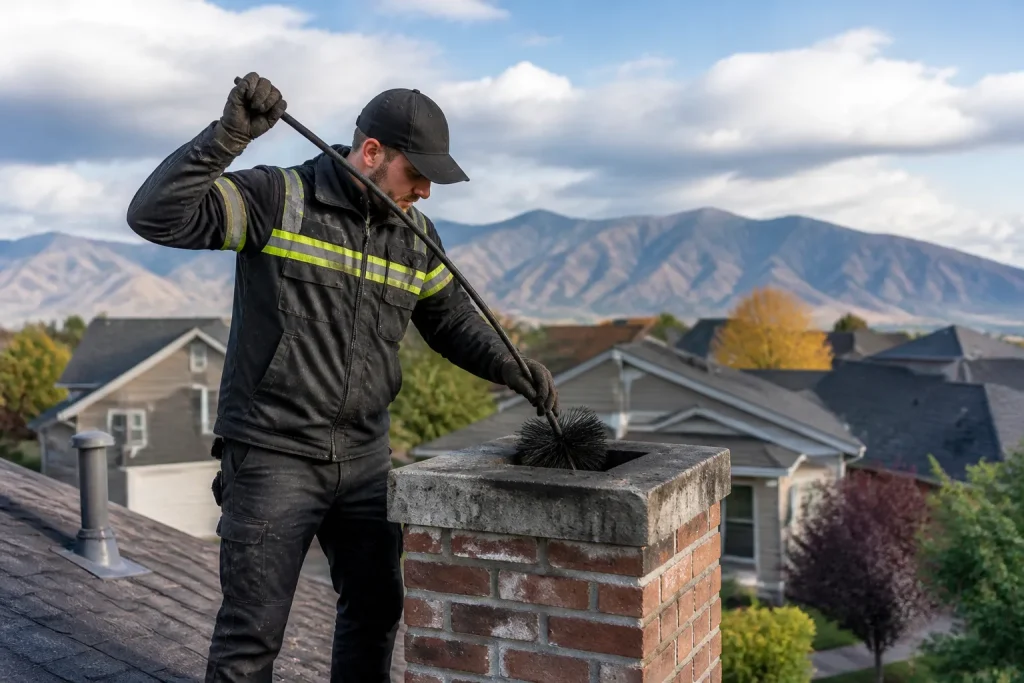
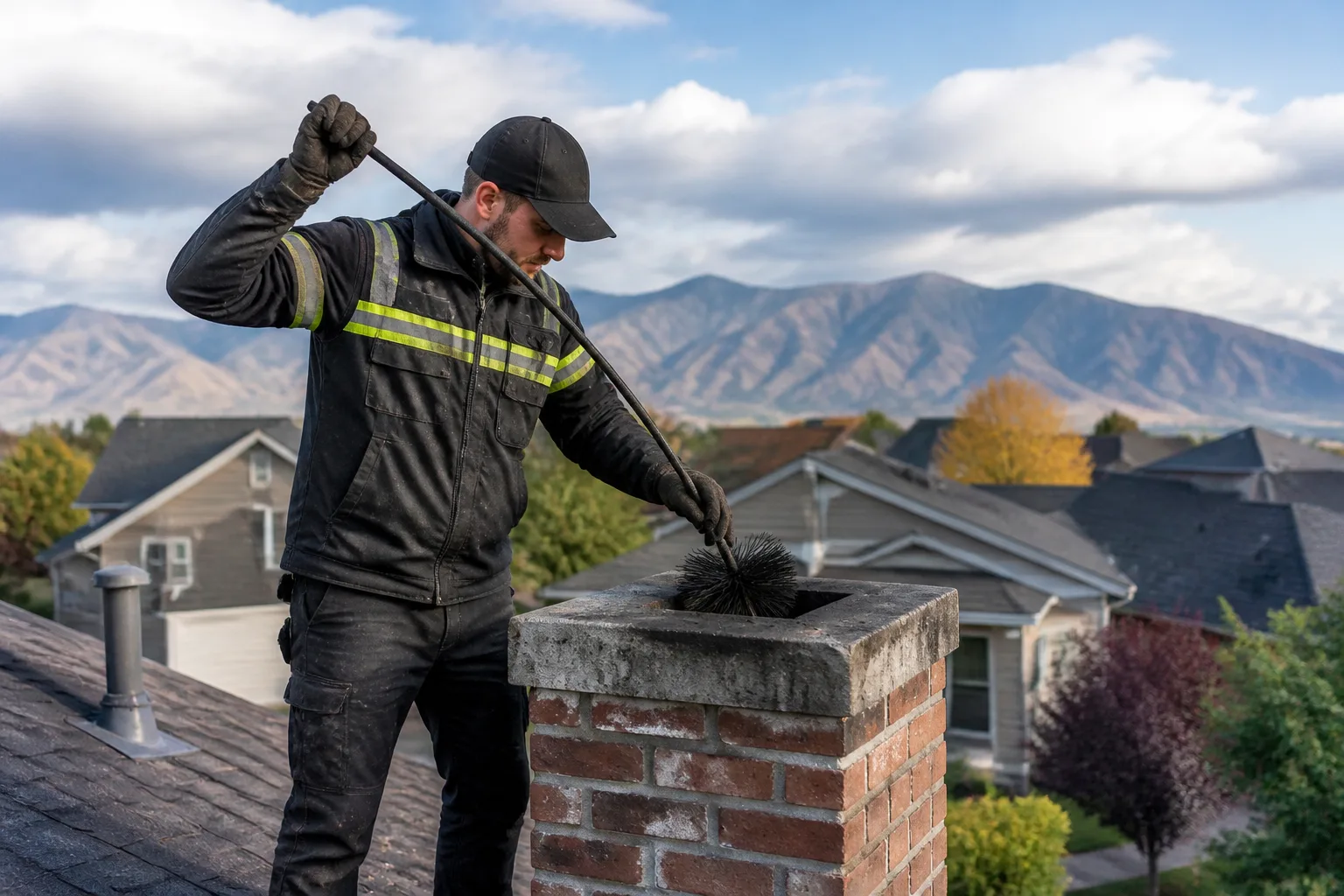
Call a pro if you can see creosote glaze on the liner, if there’s water in the firebox after rain, if efflorescence is showing on exterior brick, or if smoke spills into the room when the fireplace should be drafting. In any of those cases, a sweep alone won’t solve it, and a trained technician needs to look at the liner and masonry before you burn again. Soot and creosote removal at the flue is not a safe DIY task; the tools and personal protective equipment matter, and a glazed liner needs a trained hand.
We work with professional-grade materials, not hardware-store substitutes. That means DuraFlex flexible liner systems for relining and HeatShield ceramic resurfacing for masonry liners that can be repaired without full demolition. Caps and crowns come from Gelco and Famco, brands chimney professionals specify for proper fit and longevity. We also source from Olympia Chimney and Copperfield, trade suppliers used across the industry. One company from inspection to finished repair, so you don’t need to line up a second contractor when a sweep turns into a repair.
Related services in Herriman: a chimney sweep for routine deposits, fireplace repair for damper and firebox problems, and chimney repair for masonry, caps, and crowns.
Key takeaways
- A strong smoky smell and soot flakes are cleaning signs; daylight through mortar joints and water in the firebox are structural signs.
- Third-degree glazed creosote smells like tar and is hardest to remove; summer heat makes it noticeable.
- Cord quantity and wood type set the sweep interval better than the calendar.
- A well-drafting flue can still carry a heavy creosote load.
- Efflorescence and water intrusion need repair, not just cleaning.
The Bottom Line
The signs you need chimney cleaning split into two buckets. Deposits and smell mean a sweep. Cracks, daylight, efflorescence, and water mean repair. Sorting them takes fifteen minutes with a camera and a flashlight, and that’s the whole point of leading with inspection. If your fireplace has been coasting on “it seems fine” for a couple of seasons, that’s as good a reason as any to get it checked. If you’re in Herriman and need help, Herriman Chimney Sweep offers free estimates; call (866) 972-2258. We answer 24/7, with fast dispatch from 7am to 7pm, Sunday through Friday.
Frequently Asked Questions
The common benchmark is once a year for a household that burns regularly, but use matters more than the calendar. Two cords of seasoned hardwood a year justifies annual service; a fireplace used a few times a season can stretch further with an inspection in between. Call (866) 972-2258 for a free estimate on a sweep in Herriman.
Not always, and that’s the honest answer. A liner only needs relining when the camera shows cracking, gaps, or a failed clay lining. HeatShield ceramic resurfacing can repair a masonry liner without a full teardown. Nothing gets recommended without camera evidence you can see. Call (866) 972-2258 for an inspection.
Creosote builds up, draft margin shrinks, and the risk of a flue fire or carbon monoxide backup rises. Most of the time nothing happens for a while, which is exactly why people skip it. Call (866) 972-2258 to book a sweep before the next burning season.
No. Water in the firebox usually means a failed cap, a cracked crown, or a flashing issue, and those need chimney repair, not cleaning. Call (866) 972-2258 and we’ll inspect the cap and crown along with the flue.
Gas inserts don’t produce creosote the way wood does, but their venting and firebox still need inspection for blockage, corrosion, and proper draft. Call (866) 972-2258 for an inspection so we can tell you what your insert actually needs.
Written by the team at Herriman Chimney Sweep. Learn more at Herriman Chimney Sweep.
Need Chimney Cleaning Help?
Call Herriman Chimney Sweep - the local pro we connect you with is licensed and insured, with free written estimates in Herriman.
(866) 972-2258